
Belhaven McCallum's Stout: Your Perfect Harbor
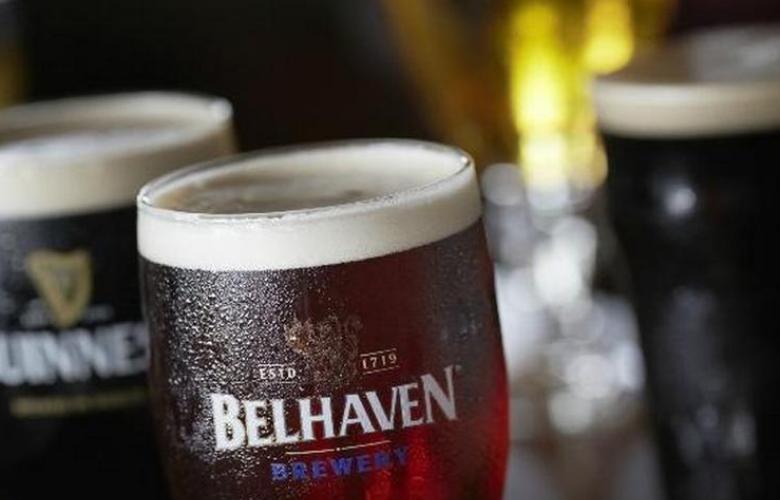
This beer revolutionized the world of stouts: the producers took a risk and made the famous dark beer sweet. Yes, it is nothing like Guinness, the world's most famous stout, but that is what makes it unique. How Belhaven brewery made such an experiment and why Belhaven McCallum's Stout became so popular all over the world — we will tell you in this article.
How it all began
Beer in the village of Belhaven (literally translated as "beautiful harbor") began to be brewed in the 12th century. At first it was monks, then in 1719 they were replaced by the Johnstone family who founded their brewery there. The location was ideally suited for production, the region boasted the finest barley, and the brewery had its own spring of pure natural water. In addition, in the first half of the nineteenth century a railroad was built to the village, which immediately opened up new opportunities for trade.
However, the family company, which specialized in traditional Scottish beers, did not become very popular. And by the 70s of the last century, the business had stalled altogether — the small company could not stand up to the industrial giants. The Belhaven brewery found a new life later, in 1972, when it had a new owner.
The new director of production development was Stuart Oss. And it was under his leadership that three new beers appeared in the brewery, among them the famous Belhaven McCallum's Stout. Stuart Oss stayed in his position until 2008, and during this time the talented brewed beverage managed to become truly legendary.
Secret ingredient
Despite the fact that the Scots are famous fans of strong alcohol, the owners of Belhaven brewery decided to do the opposite — to make stouts atypical, lighter and sweeter. They lowered the alcohol content and enriched the flavor — and the consumer liked it.
Belhaven McCallum's Stout is one of the most popular beers in the lineup. The only thing that makes it similar to a traditional stout is a lush foamy cap, thanks to the nitrogen capsule the producer glues to the bottom of the can. The color, on the other hand, is quite different: red-brown and transparent. The aroma of the drink is very mild, with a slight caramel sweetness and hints of fruit and berries. Hop bitterness is almost imperceptible and appears only after the drink warms up.
The taste of the beer is soft, sweet and dense. There are notes of dried fruits and caramel, raisins and apples, as well as distinct notes of bread. The aftertaste is short, with a slightly more noticeable bitterness than the taste.
True connoisseurs of stouts often argue whether this variety should be accepted into the family or is rather a variation for the general consumer, which has nothing to do with gourmet tastes. Whether it is or not is up to you to decide, but one thing is certain: the taste of Belhaven McCallum's Stout is memorable from the first sip, and it is definitely worth a try for anyone who is even a little bit into foamy beverages. For example, at any of the Lambic beer restaurants — come!


Why beer is served at different temperatures: explained in simple terms
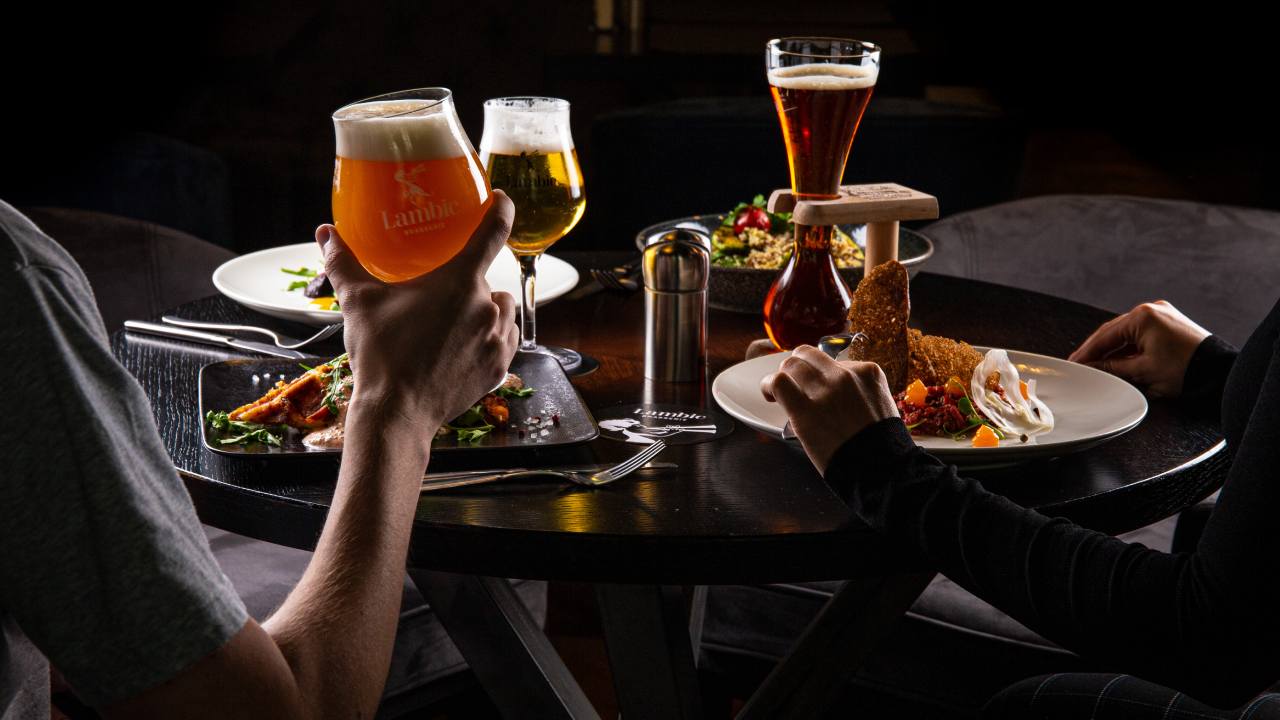
Contents How temperature changes taste, aroma, bitterness, and strength Which beer styles prefer cold, and which prefer warmth How we take care of temperature at Lambic Beer lovers know this well: pale lagers are best served ice-cold, while dark beers are noticeably better at warmer temperatures. Serving temperature is just as important a part of beer culture as the right glass or the freshness of the drink. It directly affects which flavors and aromas you perceive. Let’s break down what temperature different beer styles should be served at to reveal all their facets. How temperature changes taste, aroma, bitterness, and strength Beer contains a huge number of aromatic compounds — esters, phenols, hop oils, and various flavor notes. At low temperatures (around 0–4°C), these substances barely evaporate, so the aroma is almost imperceptible. The beer feels simply refreshing and flat. As it warms up (to 8–14°C), the aromatics begin to “wake up”: floral, citrus, spicy, or malty notes emerge. That’s why beer often “opens up” as you drink it. Temperature directly affects how basic tastes are perceived. Cold dulls the taste receptors, softening hop bitterness and making the beer more drinkable. This is ideal for light lagers. But in a dark ale or porter, where complex malty sweetness balanced by gentle bitterness is essential, cold will hide this harmony, leaving only a watery impression. Warmth, on the contrary, enhances both bitterness and sweetness, making the flavor fuller and more intense. Cold beer feels more carbonated and “sharp” on the tongue due to carbon dioxide. Warmer beer shows its body, oiliness, and creamy texture — qualities especially valued in good ales and stouts. Alcohol vapors also evaporate more readily in warmth. That’s why strong beer (above 7–8% ABV), if served too warm, can hit the nose with a harsh alcoholic aroma. Served too cold, it can create a deceptive sense of lightness, and intoxication may come unexpectedly. Which beer styles prefer cold, and which prefer warmth Broadly speaking, the entire beer spectrum can be divided into three temperature zones. Cold serving (4–7°C) — Pale lagers and pilsners. Their main purpose is to quench thirst. Cold highlights their cleanliness, light hop bitterness, and freshness.— Wheat beers (Weissbier). Cold serving enhances their spicy yeast character and citrus notes, making them incredibly refreshing.— Most mass-market beers. They are often served and stored ice-cold because low temperature masks possible flaws and a simple flavor profile, making them seem just fresh. Classic temperature (8–12°C) — Pale ales and IPAs. At this temperature, the full range of American or English hop aromas opens up — pine, citrus, tropical fruits — while bitterness remains balanced.— Amber ales and porters. Caramel and nutty malt sweetness becomes noticeable, and the texture turns rounder.— Quadrupels and other strong Belgian ales. The warmth is perceptible but doesn’t let alcohol dominate, allowing you to appreciate the fruity and spicy complexity. Warm serving (12–14°C and above) — Dark and imperial stouts. Only at this temperature do you truly experience chocolate, dried fruits, coffee, and caramel. The beer becomes like a refined dessert, with alcohol woven into the overall bouquet.— Traditional British ales. Their optimal serving temperature is room temperature (14–16°C). This reveals their malty, bready, often nutty character.— Complex Belgian ales (Trappist, abbey styles). Their fruity and spicy yeast profile requires warmth to fully unfold. How we take care of temperature at Lambic In our Lambic restaurants, the approach to temperature is part of our philosophy. Our storage system allows us to maintain different temperature regimes for different beer styles. In addition, we use the proper glassware. We never serve complex, warm beers in icy or frozen glasses. The glass is at room temperature so the beer’s flavor can reveal itself in all its dimensions. What we recommend to our guests: — Trust the staff. If you’re advised to let a beer stand for a few minutes, don’t ignore it. It means the beer will open up better after warming slightly in the glass.— Experiment. Take the same stout and try the first sip immediately, then another after 5–7 minutes. You’ll be surprised how much the flavor changes.— Don’t warm the glass with your hands. There’s no need to deliberately hold the glass in your palms, especially with strong beers. Let it warm naturally in the room.— Ask questions. Don’t hesitate to ask the bartender or server what temperature a particular beer style is usually enjoyed at. For us, that’s a sign of your interest, and we’re always happy to explain. Come to Lambic — we’ll not only help you choose a beer to your taste, but also serve it the way its character demands. And we also offer a wide selection of Belgian cuisine and a consistently cozy atmosphere. We look forward to welcoming you.
20 February 2026
The perfect evening with beer and meat: which steaks and meat dishes to choose
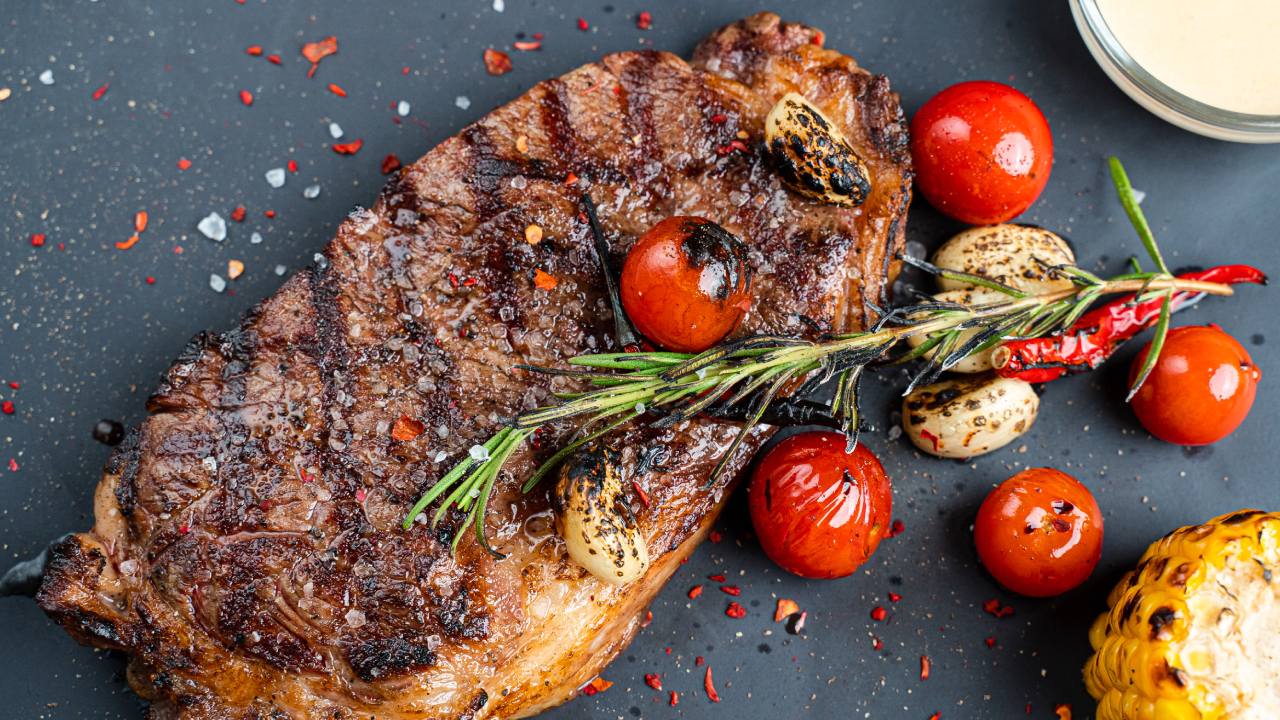
Contents What’s the secret Lambic’s meat hits and the perfect beer pairings Simple rules Beer is a universal drink: depending on the style, it can be paired with a wide variety of dishes, from rich appetizers to desserts. But a special kind of pleasure comes from serving meat dishes with a foamy pint. Let’s explain why this is such a worthy pairing and which meat-based beer snacks are truly ideal. What’s the secret Belgian beer offers hundreds of styles and directions—from fruity, spicy ales to deep, robust porters. That’s exactly why it can be called the perfect companion to meat delicacies. Almost any dish can be matched with a beer that highlights all its flavor nuances. In turn, the right meat dish helps reveal the depth and character of the beer. Lambic’s meat hits and the perfect beer pairings We explored interesting pairings of hot meat dishes and beer using selections from the Lambic menu. Ribeye Steak A premium steak cut from the thick edge of beef, famous for its marbling, juiciness, and rich flavor. Grilled with aromatic herb butter, it delivers a powerful, buttery finish. You need a drink that balances the richness of the ribeye, cleanses the palate, and highlights the caramelized grill notes. A beer that’s too light will get lost, while one that’s too bitter will clash. The perfect pair is a Belgian Dubbel or an IPA. The Dubbel beautifully echoes the meat’s caramelization. Its moderate carbonation and full body handle the fat, while its yeast-driven complexity harmonizes with the herbs. An American IPA, with its bright hop bitterness, balances the richness and refreshes the palate. Blade Steak with Potatoes in Svan Salt A more approachable yet incredibly flavorful steak from the shoulder cut. It’s often served with rich sauces—like in our case, with an aromatic red-wine demi-glace infused with cinnamon and star anise. The dish is deep and intense, with pronounced spicy accents. The beer should be strong and complex enough not to fade behind the sauce. The perfect pair is a Belgian Tripel or a Porter.Tripel is a golden, strong beer with noticeable alcohol warmth, light spice, and fruity esters. Its brightness and dryness contrast beautifully with the richness of the sauce, while the alcohol warmth supports the dish’s spices. A Porter, with notes of dark bread and caramel, creates a cozy, harmonious pairing. Grilled Sausages with Braised Cabbage and Mustard Appetizing sausages made from a blend of pork and beef, with a crispy casing, served alongside sweet-and-sour braised cabbage and spicy Dijon mustard. A great combination of fatty, sour, spicy, and smoky flavors (thanks to bacon in the cabbage). You need a versatile, refreshing yet not simplistic beer — one that cuts through the fat, softens the mustard’s heat, and complements the cabbage’s acidity. The perfect pair is a Pale Ale. Thanks to its expressive hop bouquet, it creates an interesting interaction with the dish. Its light fruitiness also highlights the caramelized sausage casing beautifully. BBQ-Glazed Pork Ribs with a Crunchy Salad Tender, fall-off-the-bone pork ribs coated in a thick, sweet-smoky glaze with Asian accents. Served with a cold, crunchy salad for contrast. This hot dish calls for a beer that can handle the sauce’s sweetness, refresh the palate, and either support the smoky notes or add a fruity freshness. The perfect pair is a Sour Ale or a Stout. For example, a Flemish red ale with its wine-like, fruity acidity works well — the complex bouquet pairs nicely with ginger and garlic in the glaze. A classic stout, with notes of roasted malt, bitter chocolate, and coffee, creates a powerful, almost dessert-like duo. It interacts with the glaze’s caramel notes, while its creamy texture balances the spice. Flemish-Style Beef Tender cuts of beef neck slowly braised in Bourgogne des Flandres beer. The result is incredibly soft and deep, with subtle acidity and spicy notes. Here, it’s best to choose a beer that creates flavor harmony. The perfect pair is the same beer used in cooking—or a similar sour or semi-sour ale. The beer’s acidity highlights the dish’s rich flavor, while its maltiness creates a complete, cohesive experience. Beef Steak with Mozzarella, Fried Egg, and Onion Marmalade A juicy chopped beef patty topped with stretchy mozzarella, a runny egg yolk, and sweet onion marmalade. A stunning combination of succulent meat, creamy cheese, egg, and sweet onion. The beer should bring all these elements together: handle the richness of the meat and cheese, avoid clashing with the egg, and emphasize the onion’s sweetness. The perfect pair is an Amber Ale. With its caramel-nutty malt profile and moderate bitterness, it complements the caramelized onions and highlights the steak’s savory depth. Simple rules Choosing meat and beer is based on simple principles of contrast and harmony. Rich and fatty dishes (ribeye, ribs) call for more bitter or sour beers. Spicy and complex dishes (blade steak, Flemish beef) need beers that are equally complex and strong. Simple, juicy dishes (sausages, beef steak) pair best with refreshing, balanced beers. Don’t be afraid to experiment and trust your senses. And if you want a guaranteed great experience — visit Lambic beer restaurants. Our servers will recommend the perfect meat to go with your beer. Enjoy your meal.
20 February 2026